
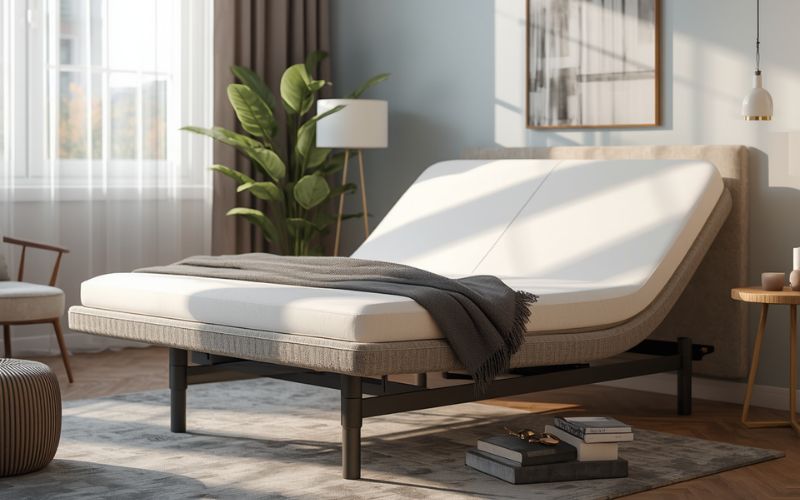
Adjustable bed bases are worth it for most people who deal with back pain, acid reflux, snoring, mild sleep apnea, or simply want to read or watch TV without stacking a wall of pillows. They let you raise your head, lift your legs, or hit a zero-gravity preset that takes pressure off your spine. If you’re looking at an adjustable bed in Great Falls, the right base can change how you sleep, how you feel in the morning, and how comfortable your bedroom is for everyday life.
But they’re not for everyone, and they don’t replace a good mattress. Here’s what you should know before buying.
What an Adjustable Base Actually Does
An adjustable bed base (sometimes called a power base) is a motorized frame that sits underneath your mattress. With a remote, you can:
- Raise the head of the bed
- Lift the foot of the bed
- Set custom angles for reading, watching TV, or working
- Hit preset positions like zero gravity, anti-snore, or flat
- Activate built-in massage on some models
- Use under-bed lighting and USB ports for nightstand charging
The Nectar Comfort Premier adjustable base, for example, includes a wireless remote, head-and-foot adjustment, massage, USB ports, and under-bed lighting. The Comfort Classic offers head-and-foot adjustment in a more streamlined package. Both are stocked at Payless Furniture & Mattress.
Who Benefits Most From an Adjustable Base
Adjustable bases aren’t a luxury upgrade for most people. They’re a practical fix for specific problems.
People with Acid Reflux or GERD
If you wake up with heartburn, an adjustable base may genuinely change your nights. Mayo Clinic recommends elevating the head of the bed for people with GERD, noting that gravity helps keep stomach acid where it belongs. They also point out that propping up with extra pillows usually isn’t enough. Doctors typically recommend a 6-to-8-inch elevation, which an adjustable base does easily and consistently.
A 2012 clinical study found that bed-head elevation reduced esophageal acid exposure and improved sleep for nighttime reflux sufferers. If you’ve been dealing with reflux, this is one of the simpler interventions to try.
People with Snoring or Mild Sleep Apnea
Snoring usually happens when your airway gets partially blocked while you sleep on your back. Lifting your head opens the airway, reducing the noise. For people with mild sleep apnea, head elevation can complement a CPAP machine, although it’s not a replacement for prescribed treatment.
People with Lower Back Pain
The zero-gravity position raises your head and feet slightly above your heart. This takes pressure off your lower spine and is often recommended for people with disc-related back pain. It also reduces strain on the lumbar region by removing the weight of your legs from the equation.
AARP’s testing team consulted with an orthopedic surgeon and a physical therapist for their adjustable bed reviews. The team confirmed that adjustable bases can ease back pain, acid reflux, and circulation issues for older adults, although they emphasize talking with your doctor first if you have specific health concerns.
People with Circulation Issues
Lifting the legs improves blood flow back toward the heart. This helps reduce swelling in the feet and ankles, which is common for people who stand or sit for long stretches during the day. It’s also useful for varicose veins and general leg fatigue.
Anyone Who Reads or Watches TV in Bed
This is the underrated reason people love adjustable bases. Sitting up to read or watch a movie without piling pillows behind your back is genuinely more comfortable. Once you have one, you don’t go back.
Who Probably Doesn’t Need One
Adjustable bases aren’t for everyone. Skip one if:
- You sleep on your stomach. Adjustable bases work best for back and side sleepers. Stomach sleeping with the head raised forces an awkward neck angle.
- You’re on a tight budget and don’t have a specific health reason. A quality adjustable base typically starts around $700 to $1,000 and goes up from there. If you don’t have back pain, reflux, or snoring to address, the value is more about luxury than necessity.
- You move the bed often. Adjustable bases are heavier and harder to relocate than a basic frame.
Will Your Mattress Work on an Adjustable Base?
Not every mattress flexes. Here’s the breakdown:
- Memory foam mattresses work great. They bend easily and conform to the angles.
- Hybrid mattresses (foam over pocketed coils) usually work well, especially newer models built with adjustable bases in mind.
- Latex mattresses generally work, although they’re heavier and may not flex as easily.
- Traditional innerspring mattresses with interconnected coils usually don’t work. The coil system can’t bend without damage.
Before you buy, check whether your current mattress is rated for adjustable use. If you’re buying both at once, ask the salesperson at Payless Furniture which mattresses they recommend pairing with each base.
Features Worth Looking For
Adjustable bases vary widely in features. Here’s what actually matters:
- Quiet motor. A noisy motor will wake you (or your partner) every time you adjust.
- Wireless remote. Some include a backlit remote so you can find buttons in the dark.
- Preset positions. Zero gravity, anti-snore, flat, and TV are the most useful presets.
- Memory positions. Lets you save your favorite angles.
- USB ports. Convenient for charging phones from the nightstand area.
- Under-bed lighting. Helps if you get up at night without waking up the whole bedroom.
- Massage. Some find this useful, others use it once and forget. Don’t pay extra for it unless you’ll actually use it.
- Wall-hugging design. Lets the bed slide back as it raises so your nightstand stays in reach.
Setting It Up
Most adjustable bases plug into a standard outlet. They go on a platform or directly on the floor (depending on the model and your bed frame). You can usually keep your existing headboard with a bracket kit, although the headboard may not move with the base. The Nectar Comfort Classic, for example, has a specific headboard bracket for connecting to the base.
For couples, a split king setup uses two Twin XL adjustable bases side-by-side. Each side moves independently, so if one of you wants to read sitting up while the other sleeps flat, no problem.
What to Expect Pricing-Wise
Quality adjustable bases run from around $700 for entry-level queens to $2,500 or more for premium split kings with all the features. Like mattresses, prices drop during major holiday weekends. If you can wait, Presidents’ Day, Memorial Day, Labor Day, and Black Friday usually bring 20% to 40% off.
Try Before You Buy
Adjustable bases feel different than a flat bed. Before committing, lie on one in the showroom. Hit the zero-gravity preset. Try the head incline. See how the bed adjusts. The feel of an adjustable base in motion is hard to picture from a product description.
For Great Falls shoppers, Payless Furniture & Mattress at 116 Central Ave. West stocks Nectar adjustable bases including the Comfort Classic and Comfort Premier in queen. Stop in to test, or call 406-453-4582 with questions.
Quick Recap
- Worth it for: Back pain, acid reflux, snoring, sleep apnea, circulation issues, reading and watching TV in bed
- Probably skip if: You’re a stomach sleeper or just looking for a luxury upgrade with no specific reason
- Mattress compatibility: Memory foam and most hybrids work; traditional innerspring usually doesn’t
- Test before you buy: A 5-minute showroom test tells you more than any spec sheet
If you’ve been stacking pillows for years to get comfortable, an adjustable base is one of those upgrades you wish you’d made sooner. For more on how it fits into your overall mattress decision, see our full mattress shopping guide for Great Falls.